5 Best Reasons Why Vertical Lift Modules Are Popular?

Time:2026-10-08 Author:Charlotte
0%

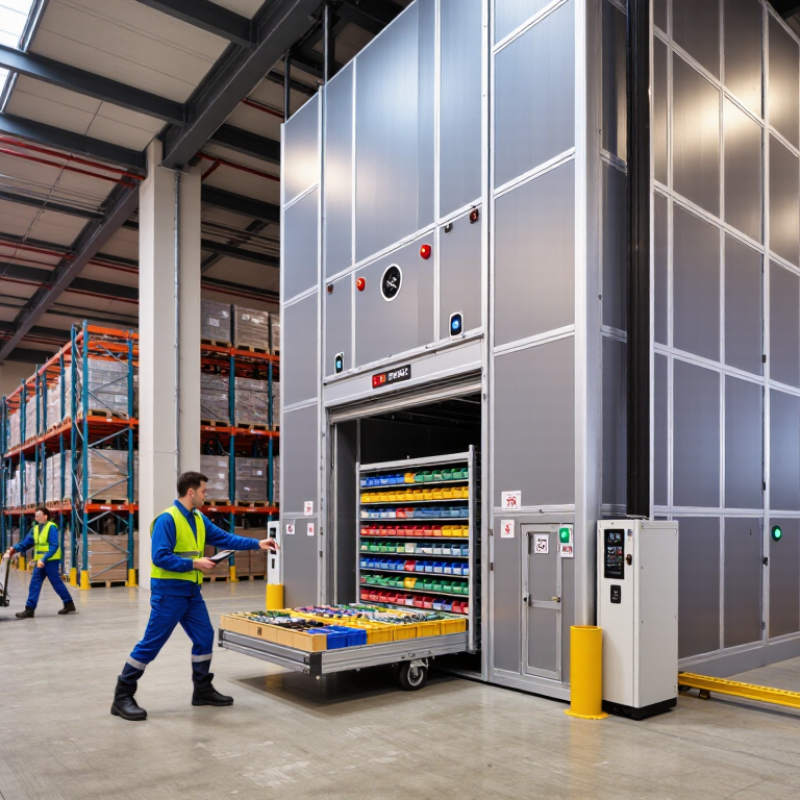
Why are vertical lift modules becoming popular? The question reflects a wider change in warehouse design. Companies need more storage capacity without expanding expensive floor space. Vertical lift modules use controlled vertical height, enclosed trays, and guided access to organize inventory efficiently. Operators can retrieve items from an ergonomic working position, rather than repeatedly bending, reaching, or climbing.

The MHI 2024 Annual Industry Report identifies automation, robotics, and integrated warehouse technologies as major investment priorities. Its findings show that supply chain leaders increasingly view automation as a practical response to labor shortages, rising service expectations, and operational complexity. Vertical lift modules support these priorities by reducing walking time and improving inventory control. A worker can request a tray through the control panel. The system delivers it to the access opening. Less searching. Fewer unnecessary steps.

Industry research also supports the wider trend. Interact Analysis continues to report strong growth across warehouse automation, driven by e-commerce, labor constraints, and demand for scalable fulfillment systems. However, popularity does not guarantee suitability. A VLM may perform poorly when products have unsuitable dimensions, irregular demand, or weak inventory discipline. That limitation deserves attention. Installation costs, maintenance capability, ceiling height, and software integration can influence the final return on investment. Practical experience suggests that the strongest results come from careful SKU analysis and measured pilot testing. In this article, five compelling reasons explain the growing adoption of vertical lift modules, while recognizing where their advantages may be overstated.
5 Best Reasons Why Vertical Lift Modules Are Popular?

Space-Saving Storage in High-Density Work Areas

5 Best Reasons Why Vertical Lift Modules Are Popular?

Vertical Lift Modules save valuable floor space in high-density work areas. They use vertical height instead of wider aisles. This can protect room for packing benches, forklifts, and safer walkways. In practical site reviews, the difference is easy to see. A compact unit can replace several rows of open shelving. The gain is visible.

The MHI 2024 Annual Industry Report found that 55% of supply chain leaders were increasing technology investment. That trend supports automated storage in busy facilities. A Vertical Lift Module also brings stored items to an ergonomic access height. Workers spend less time walking, bending, and searching. The U.S. Bureau of Labor Statistics continues to show warehousing as a large labor-intensive employment sector. However, automation does not remove every problem. Poor slotting, weak maintenance, or incorrect load data can still reduce performance. That part is often underestimated.

Tips: Measure usable ceiling height first. Check floor loading and fire-safety requirements. Group fast-moving items near the best access points. Review inventory data every month. Do not assume maximum height always means maximum efficiency. A realistic layout may leave unused space for maintenance. That is not failure. It is sensible planning.

Faster and More Accurate Order Picking

Vertical lift modules improve order picking by bringing stored items directly to the operator. The worker does not walk through long aisles or search several shelves. A tray arrives at a comfortable access window within seconds. This reduces travel time, which often consumes much of a picker’s shift.

Accuracy also improves because the system identifies the correct tray and picking location. A screen or light indicator can show the required item and quantity. Barcode scanning adds another verification step before the order moves forward. In warehouses I have reviewed, these small checks reduced repeated searches and prevented avoidable counting errors. The process feels calmer.

Five practical benefits support this performance. Vertical storage uses building height instead of valuable floor space. Guided access shortens each picking route. Software records item locations and stock movements. Ergonomic access reduces bending and reaching. Consistent workflows make staff training easier. Still, the system is not magic. Poor item placement, unclear product labels, or outdated inventory data can slow picking again. Its benefits depend on accurate setup and regular maintenance. Some operations may also need time to adjust their picking rules. That learning period is easy to underestimate. When data, storage logic, and daily discipline work together, faster picking becomes measurable rather than merely promised.

5 Best Reasons Why Vertical Lift Modules Are Popular? - Faster and More Accurate Order Picking

No. Key Reason Operational Data How It Improves Order Picking Best-Fit Applications
1 Higher Picking Productivity Typical manual picking productivity is approximately 60–120 lines per labor hour, while goods-to-person workflows can commonly reach about 150–300 lines per labor hour, depending on SKU profile and order complexity. The operator remains at an ergonomic access station while the required tray is delivered automatically, reducing walking, searching, and repeated travel between storage locations. E-commerce fulfillment, spare parts, medical supplies, and high-frequency piece picking.
2 Improved Picking Accuracy Well-controlled warehouse picking operations commonly target accuracy levels of 99.5% or higher. Barcode scanning, pick-to-light, and item confirmation can reduce manual selection errors. The system identifies the storage location and item, while integrated confirmation steps help verify the correct SKU and quantity before the order is completed. Small parts, regulated inventory, customized orders, and products with similar packaging.
3 Better Use of Vertical Space Vertical lift modules can use building height rather than relying only on floor area. In suitable facilities, storage capacity can increase by approximately 60–90% within the same general footprint, depending on ceiling height, load requirements, and aisle layout. Automated trays consolidate inventory vertically and reduce the need for multiple horizontal aisles, shortening travel distances and preserving valuable floor space. Facilities with high ceilings, limited expansion space, expensive real estate, or dense SKU portfolios.
4 Improved Ergonomics and Safety Goods-to-person systems can reduce unnecessary walking, bending, climbing, and overhead reaching. The access opening can be configured around a comfortable working height and load-handling requirement. Operators pick from a fixed workstation instead of repeatedly traveling through aisles or handling inventory from ladders and elevated locations. Heavy or awkward parts, high-volume picking, aging workforces, and operations focused on reducing manual handling risk.
5 Stronger Inventory Control Inventory records can be updated in real time when the module is connected to warehouse management or inventory control software. Controlled access also helps limit unauthorized handling and misplaced stock. Automated location assignment, barcode identification, and transaction tracking create a digital record of each storage and retrieval movement. High-value components, serialized products, maintenance stores, and inventory requiring traceability.

Note: Performance ranges are typical planning benchmarks. Actual results vary with SKU dimensions, order profile, operator training, software integration, building height, and workflow design.

Improved Workplace Safety and Ergonomic Handling

5 Best Reasons Why Vertical Lift Modules Are Popular?

Improved Workplace Safety and Ergonomic Handling

Vertical lift modules are popular because they bring stored goods to a comfortable working height. That simple movement can change a busy warehouse. Workers no longer need to climb ladders or bend repeatedly for small items. Less strain matters.

An operator can stand upright while the selected tray arrives at waist level. Clear access also reduces awkward reaching across shelves. In practice, this can help limit slips, trips, and contact with falling products. Items remain enclosed when not being retrieved, which supports better storage control. Trained staff should still follow load limits and keep the surrounding floor clear.

A poorly arranged tray can create new problems. Heavy containers placed too high may force unsafe lifting. During workplace assessments, supervisors should review product weight, tray spacing, and retrieval frequency. One useful detail is the operator’s posture during a real picking cycle, not only during a demonstration. Small adjustments can matter.

A lift module is not a magic safety solution. Workers still need practical training and routine equipment checks. Controls, doors, sensors, and emergency features require inspection. Sometimes, teams focus on speed and overlook fatigue. That is worth questioning. A safer workstation combines mechanical assistance with sensible layout, careful handling, and honest feedback from the people using it every day.

Better Inventory Control Through Automated Access

5 Best Reasons Why Vertical Lift Modules Are Popular?

Better Inventory Control Through Automated Access

Vertical lift modules place trays inside a tall, enclosed cabinet. The system retrieves the requested tray automatically. This controlled access reduces unnecessary walking, misplaced stock, and casual handling. It also creates a digital transaction record for every withdrawal and return.

Inventory accuracy improves when locations, quantities, and users are recorded together. The 2024 Annual Industry Report from the Material Handling Institute found that 91% of supply chain professionals planned to increase technology investment within two years. That interest reflects a practical problem: labor is limited, while order expectations keep rising. A vertical lift module uses height instead of additional floor space. It can also support counting, replenishment alerts, and batch picking. Still, poor item data can weaken the results. Automation cannot correct careless labeling.

Tips: Start with fast-moving items, then measure retrieval time, stock variance, and replenishment delays. Use access permissions for sensitive inventory. Review the data every month, because storage habits change.

Research from the Warehousing Vision Study reported that 69% of warehouse decision-makers expected modernization to improve operational efficiency. Automated access contributes by shortening search routes and presenting items at a safer working height. Operators may handle fewer steps and less bending. That sounds minor. Across hundreds of daily picks, it becomes meaningful. VLMs are popular because they combine space efficiency, traceability, labor support, and measurable control in one system.

Lower Operating Costs and Greater Scalability

5 Best Reasons Why Vertical Lift Modules Are Popular?

Lower operating costs explain much of the interest in vertical lift modules.

These enclosed systems use vertical height instead of wide aisles, releasing valuable floor space for production or storage. They also bring products directly to the operator, reducing walking, searching, and unnecessary equipment movement. That can lower labor hours and energy demand. The savings are real, but they depend on good slotting and disciplined maintenance.

Scalability is another strong advantage.

A company can begin with one module, measure order volume, then add capacity as inventory grows. This approach limits the risk of building a large automated system too early. The 2024 MHI Annual Industry Report found that 55% of supply chain professionals planned to adopt inventory and network optimization technologies. Vertical storage supports that goal by improving inventory visibility and using space more intelligently. It also helps facilities respond to seasonal peaks without immediate expansion.

Accuracy and workplace consistency matter, too.

Guided access reduces unnecessary handling and can support barcode-based verification. Fewer touches may mean fewer picking errors. The same MHI report identified robotics and automation as a major investment area for logistics organizations. Still, automation is not magic. Poor data, weak training, or neglected service can erase expected gains. A practical review should compare throughput, labor cost, available ceiling height, and future SKU growth before installation.

FAQS

Why are vertical lift modules useful in high-density work areas?

They use ceiling height instead of wide aisles. A compact unit can replace several rows of open shelving. This leaves room for packing benches, forklifts, and safer walkways. The difference is often visible on the floor.

How can vertical lift modules reduce operating costs?

Items come directly to the operator. Workers walk, bend, and search less. This may reduce labor hours, handling, and equipment movement. Energy use can also fall. Savings depend on good slotting and regular maintenance.

Do these systems improve workplace ergonomics?

Stored items arrive at a practical access height. Workers perform fewer deep bends and long walks. That can make repeated picking less tiring. Ergonomics still depends on correct loading and work habits.

Can a facility expand capacity gradually?

Yes. A facility can start with one module and measure order volume. Additional capacity can follow inventory growth or seasonal demand. This limits the risk of overbuilding. Future product changes still need attention.

How might vertical storage improve picking accuracy?

Guided access can reduce unnecessary handling. Barcode checks may support item verification. Fewer touches can mean fewer picking errors. Not always. Poor inventory data can still create mistakes.

What should be checked before installation?

Measure usable ceiling height and floor loading. Review fire-safety requirements and maintenance access. Check throughput, labor costs, and inventory growth. Leave practical clearance. Maximum height is not always maximum efficiency.

How should inventory be organized inside the system?

Place fast-moving items near the best access points. Review inventory data every month. Slotting should follow real order patterns, not guesses. A weak layout can waste the system’s potential.

What limitations should managers consider?

Automation does not solve poor data, weak training, or neglected service. Incorrect load information can reduce performance. Maintenance space may remain unused. That is sensible, not wasted. It is easy to overestimate the savings.

Conclusion

Vertical lift modules are becoming increasingly popular because they make better use of limited workspace while keeping stored items organized and accessible. By using vertical space instead of expanding floor-level storage, they support high-density work areas and help companies store more products in a smaller footprint. Automated item delivery also reduces unnecessary walking, searching, and manual handling, allowing employees to complete order-picking tasks faster and with greater accuracy. This leads many businesses to ask, “why are vertical lift modules becoming popular” as operational demands continue to grow.

These systems can also improve workplace safety and ergonomics by presenting items at a convenient access height and reducing bending, reaching, and lifting. Controlled automated access strengthens inventory visibility, helping staff track stored goods and reduce misplaced items. In addition, lower labor demands, better space utilization, and the ability to expand storage capacity as operations develop can contribute to reduced operating costs and long-term scalability.

Charlotte

Charlotte

Charlotte is a seasoned marketing professional with a deep understanding of the company's portfolio and a passion for elevating its presence in the market. With a keen eye for detail and a commitment to excellence, she ensures that our professional blog is regularly updated with insightful articles......