What is the lifespan of industrial warehouse racks? The answer is rarely a single number. Well-maintained pallet racks can serve for 15 to 30 years. However, forklifts, heavy loads, moisture, poor installation, and repeated impacts can shorten that period dramatically.
Warehouse safety consultant David J. Piasecki offers a useful principle: “Rack life is a maintenance question before it is an age question.” This idea matters on a busy warehouse floor. A bent upright near Dock 3 may look minor during a rushed shift. It may still reduce the rack’s safety margin. A missing beam lock creates another quiet risk. Small defects often become expensive problems when nobody records them.
This guide examines seven practical tips for extending rack service life. It will discuss inspections, load labels, impact protection, corrosion control, installation quality, repairs, and worker training. The details are physical and measurable. Look for twisted frames, cracked welds, loose anchors, leaning uprights, and overloaded beams. Photographs can help compare damage over time. Inspection records can reveal patterns that memory misses.
There is no perfect lifespan chart. Real warehouses are messier than planning documents suggest. Some racks remain stable after decades. Others require removal much earlier. That difference deserves honest attention. Age alone does not prove failure, but age should encourage closer review. When damage affects structural members, stop guessing and request evaluation from a qualified rack professional.
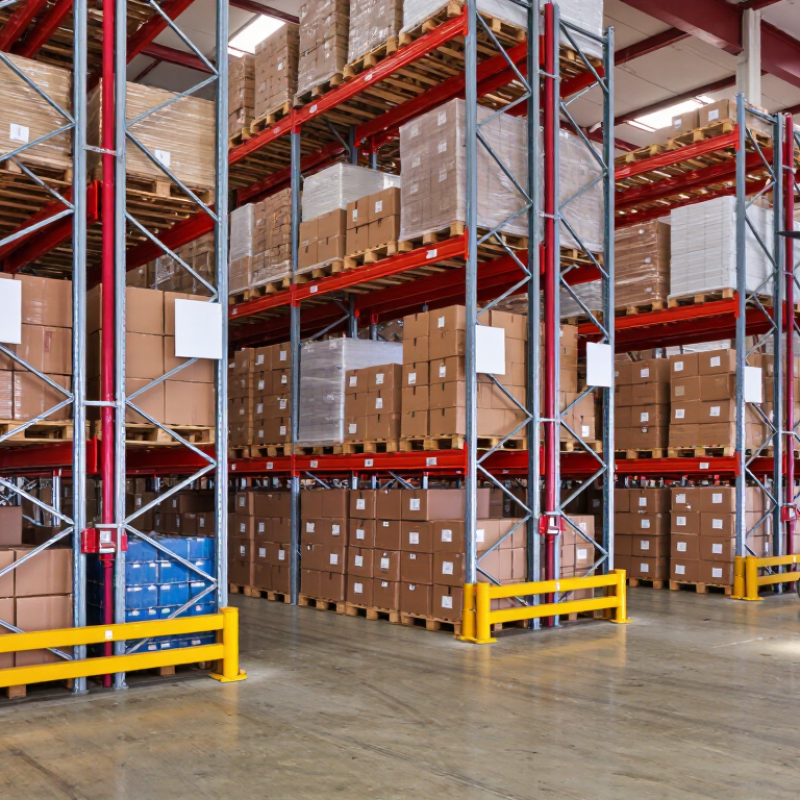
What Is the Lifespan of Industrial Warehouse Racks? 7 Tips
What Determines the Lifespan of Industrial Warehouse Racks
Industrial warehouse racks commonly last 10 to 20 years, but the environment decides more than the calendar. Load weight, beam design, installation quality, forklift traffic, and maintenance all influence service life. A rack holding dense steel coils faces different stress than one storing empty cartons. Moisture can also turn a small scratch into visible corrosion within months.
Tips: Keep every load within the rack’s rated capacity. Inspect upright frames, beams, anchors, and connections regularly. Replace damaged components promptly. Train forklift operators to avoid sharp impacts. Keep aisles clear and floors level. Control humidity in damp storage areas. Review the system after every layout change.
A weekly visual check can reveal bent steel, loose anchors, missing safety pins, or uneven loading. Monthly inspections should examine rust, weld areas, and beam deflection more closely. Qualified personnel should assess serious damage before the rack returns to service. Do not rely on appearance alone. A clean rack may still have hidden fatigue or overloaded connections. Maintenance teams sometimes focus on corrosion and overlook repeated forklift contact. That mistake is common. Records also matter, because repair dates and load changes show how the structure has aged. Some racks last beyond 20 years, while poorly maintained systems may become unsafe much earlier. Lifespan is not a promise. It is a moving result of daily decisions.
| Tip | Key Dimension | Typical Service-Life Range | What Determines the Lifespan | Recommended Action | Risk if Neglected |
|---|---|---|---|---|---|
| 1 | Identify the rack system | Approximately 10–20+ years | Selective pallet racks, drive-in racks, cantilever racks, and mobile systems experience different loading patterns, impact exposure, and movement. The stated range is an indicative service-life expectation, not a guaranteed replacement date. | Record the rack type, installation date, configuration, load rating, and any later modifications. | Medium |
| 2 | Control load capacity | No fixed life extension | Uprights, beams, connectors, and anchors must remain within their engineered load limits. Overloading, unevenly distributed pallets, and unapproved beam-level changes can accelerate permanent deformation. | Display load notices at rack entrances and beam levels, and verify loads whenever pallets, forklifts, or storage levels change. | High |
| 3 | Prevent forklift impact | Impact can shorten life immediately | Repeated contact can bend uprights, damage bracing, loosen anchors, and reduce structural capacity even when the rack still appears usable. | Install suitable guards where needed, maintain clear aisle widths, train operators, and quarantine visibly damaged components until assessed. | High |
| 4 | Manage corrosion and environment | Often 5–15 years in severe exposure | Moisture, condensation, chemicals, salt air, outdoor exposure, and poor drainage can reduce steel thickness and weaken protective coatings. Dry indoor conditions generally produce less corrosion than wet or chemically aggressive environments. | Repair sources of moisture, keep racks clean and dry, document coating damage, and replace components with significant section loss or perforation. | Medium to High |
| 5 | Inspect on a regular schedule | Inspection does not replace engineering review | Frequent visual checks help detect bent members, missing pins, loose anchors, damaged welds, displaced beams, and overloaded locations before defects become more serious. | Perform routine operator checks, conduct documented management inspections at least monthly, and arrange a competent-person assessment after major damage or modification. | High |
| 6 | Maintain the floor and anchors | Foundation and anchorage dependent | Uneven or cracked floors, inadequate anchor embedment, settlement, and loose or missing fasteners can cause instability and increase stress in the rack frame. | Keep the floor level and unobstructed, inspect anchor assemblies, repair defects using approved methods, and do not drill or relocate anchors without technical approval. | High |
| 7 | Replace or repair based on condition | Condition-based, not age-only | Age alone does not establish safe remaining life. A rack may require immediate repair or replacement because of bowed members, cracked welds, severe corrosion, missing components, unauthorized alterations, or repeated impact. | Isolate unsafe bays, use compatible replacement parts, obtain a qualified structural assessment when capacity is uncertain, and keep inspection and repair records. | High |
Important: Industrial rack lifespan varies by design, duty cycle, environment, maintenance, installation quality, and accidental damage. The ranges shown are practical planning estimates; the safe decision to repair, continue using, or replace a rack must be based on its condition, rated capacity, applicable local requirements, and assessment by a competent professional.
They may last 10 to 20 years. Service conditions matter more than age. Heavy impacts, overloads, and moisture shorten useful life.
Check upright frames, beams, connectors, locking pins, anchors, and floor plates. Look for dents, missing pins, leaning frames, rust, and unstable pallets. Small marks matter.
Inspect the rack immediately. Unload and isolate the damaged bay with visible barriers. Temporary unloading is safer than guessing.
Repair may suit limited damage, such as one bent beam. A qualified engineer should approve the repair method. Never straighten structural parts with heat or improvised tools.
Replace it when uprights are severely bent or welds have split. Missing connectors and serious rust also justify replacement. Reduced metal thickness is a warning.
Compare actual pallet weights with posted capacity limits. Keep load notices readable. Overloading is not a repair problem; it requires a safer load decision.
Consider an upgrade when pallet weights, storage heights, equipment, or aisle traffic change. Check floor conditions and anchors before adding levels. Turning points may need impact protection.
Use a marked form with the location, damage type, date, photograph, and corrective action. Review records monthly. Repeated dents may reveal poor traffic routes.
No. Appearance proves little. Check hidden anchors, uneven beams, connectors, and welds. I may miss something, so independent reviews remain valuable.
Understanding what is the lifespan of industrial warehouse racks requires more than looking at their age. Rack longevity depends on the steel quality, load capacity, installation accuracy, usage frequency, warehouse conditions, and the level of protection provided against impacts and corrosion. Different systems may serve for many years, but their practical service life varies according to design, workload, maintenance, and operating environment.
Seven common factors can shorten rack life: overloading, uneven loading, forklift collisions, unauthorized modifications, poor installation, moisture or chemical exposure, and neglected inspections. To support safer and longer use, businesses should conduct routine visual checks, verify rack alignment and connections, remove damaged components from service, and keep accurate load information visible. Repairs should only be made when the structure remains sound and the cause of damage is addressed. Replacement or an upgrade is more appropriate when damage is extensive, capacity needs change, or the system can no longer meet current safety and operational requirements.

 RAB Logistics