Zone picking divides a warehouse into defined areas, with each worker responsible for collecting items within an assigned zone. Orders move between zones or combine at a consolidation point. The approach can reduce long walks, but only when inventory, staffing, and handoffs are planned carefully. Small details matter. A poorly placed fast-moving item can create congestion around a packing station.
This guide explains how to implement a zone picking strategy successfully in 2026, from mapping zones to testing workflows with real orders. It covers practical choices such as setting zone boundaries, balancing workloads, choosing carts or conveyors, and configuring warehouse management system rules. Useful measures include picks per labor hour, order cycle time, travel distance, and errors at zone handoffs. Track them before and after a pilot; a single busy shift may not reveal the full picture. In practice, product mix, seasonal demand, and building layout can change what works. That is easy to underestimate. Even a sensible design may need revision after workers encounter blocked aisles or uneven order volumes. The aim is not a perfect layout on paper. It is a safer, clearer process that teams can adjust using reliable operating data.
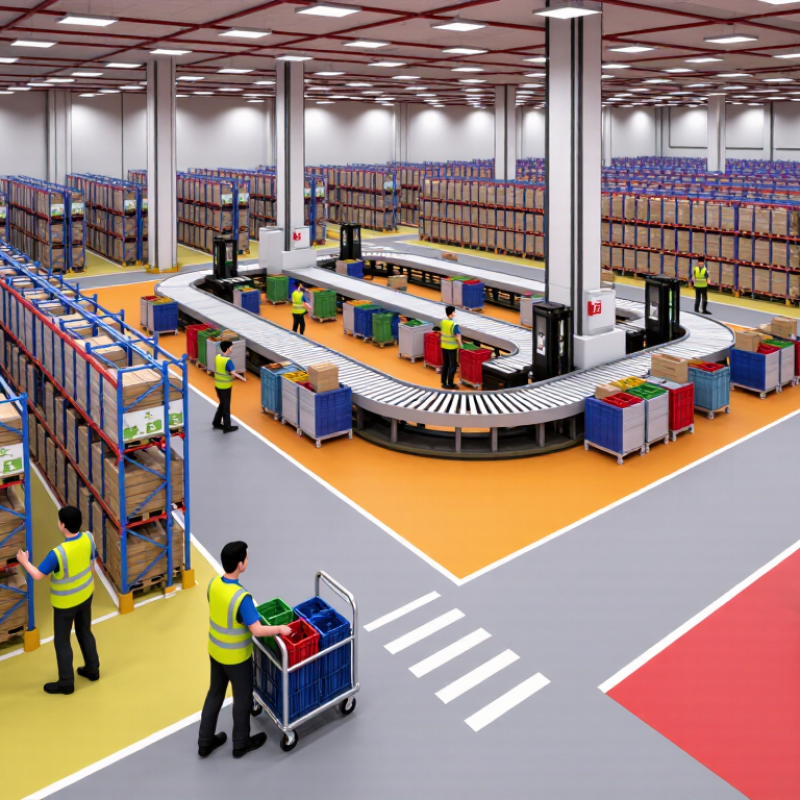
How to Implement a Zone Picking Strategy in 2026?
Assess Order Profiles and Warehouse Readiness for Zone Picking
Before assigning pickers to zones, examine what customers actually order. Review several weeks of order lines, units per order, SKU velocity, and seasonal peaks. A warehouse shipping mostly single-item orders may gain little from zone picking. But orders containing products from several aisles could benefit from shorter walking routes. Look for concentration, too: if a small group of fast-moving items drives most picks, their location can shape zone boundaries. Small details matter.
Map the proposed zones against aisle lengths, storage locations, replenishment paths, and packing stations. Then estimate how often orders will cross zone boundaries. Too many handoffs can create queues, even when walking distance falls. Check inventory accuracy, scanner coverage, and whether your warehouse system can track partial orders and release work by zone. Talk with pickers about blocked aisles and awkward reaches; a clean layout on paper may not match a busy shift. It rarely does.
Set a baseline for pick time, travel distance, order completion, and errors before changing the process. Run a limited pilot during a representative shift, not just a quiet morning. Watch for uneven workloads, late replenishment, and totes waiting between zones. Compare results with the baseline, and revise zone sizes or release rules where evidence points to a problem. Some order patterns will remain unpredictable, so leave room to adjust.
How to Implement a Zone Picking Strategy in 2026?
Map zones around product demand, physical layout, and the work moving through your warehouse. Place fast-moving items near dispatch only when replenishment and safe access support that choice. Keep heavy cartons at waist height, fragile goods away from busy crossings, and frequently ordered items within short walking routes. A zone should match real work, not just a tidy floor plan. Walk the route with a picker before fixing boundaries.
Tips: Mark each zone with clear aisle and shelf labels. Test a sample of real orders, then track travel time, queueing, missed picks, and replenishment delays. Short trials help.
Zone boundaries should reflect product relationships and order patterns. Items commonly picked together may belong nearby, but bulky stock can make that impractical. Separate zones where carts or people repeatedly meet in narrow aisles. Share clear handoff points, such as a labeled takeaway lane, so picked totes do not block replenishment. Review results after busy periods and adjust based on evidence. The first map may be wrong. That matters. Ask workers where scanning, walking, or waiting feels awkward, then compare feedback with pick accuracy and congestion data. Start small.
Zone assignments should reflect the work, not just the warehouse map. Group locations with similar pick volumes, item sizes, and handling needs. Then assign enough trained pickers to cover each zone’s expected workload during busy periods. A fast-moving area may need more staff, while a quiet zone can share a picker with nearby locations. Keep assignments visible on a simple shift board.
Match equipment to the zone. Use carts with separate bins for small items, and reserve pallet equipment for bulky loads where aisles allow safe movement. Check travel paths before setting routes; a cart that fits on paper may block a tight corner. Small details matter. Keep spare scanners and charged batteries near work areas, so a minor equipment issue does not stop a whole zone.
Orders also need thoughtful distribution. Send compatible items from one order through the same zone when possible, but avoid flooding a single area with urgent work. Use order size, promised dispatch time, and item location to guide release. Track queue depth, missed scans, and picker travel time each shift. These signals can reveal poor balance, though they do not explain every delay. Review the plan with workers, then adjust it; the first version will probably need work.
Zone picking works when the floor plan and software agree. Divide the warehouse into zones using product velocity, order history, and physical constraints—not just aisle boundaries. Keep fast-moving items near dispatch where practical, but avoid crowding one area with every popular SKU.
MHI’s 2024 Annual Industry Report found that 55% of surveyed supply-chain professionals expected investment in supply-chain technology to increase. That makes system configuration important, but spending alone will not fix unclear handoffs.
Set the warehouse system to release orders in manageable waves and assign each line to its home zone. Use clear scan prompts at pick locations, and record short picks immediately so downstream zones are not waiting on bad inventory data. At zone exits, define where totes pause, how completed orders merge, and which exceptions need a supervisor.
Keep it visible. A simple status board can show waiting, active, and delayed orders without forcing workers to search through screens.
Coordination needs real-time rules, not hopeful timing. Match wave size to the slowest zone’s capacity, then adjust when replenishment or congestion interrupts work. Test one shift. Track order completion time, missed scans, and work-in-process between zones; compare results with the previous process.
A clean zone map can still fail when one aisle has narrow turns or frequent replenishment. That detail is easy to miss, and worth revisiting after the first week.
Track each zone with a small set of measures: picks per labor hour, order accuracy, travel time, and queue length. Capture a baseline before changing assignments or batch sizes. Without it, a faster-looking shift may simply reflect easier orders.
Use timestamps from order release to completed handoff, then compare results by zone and shift. A simple dashboard can reveal that one aisle regularly builds a ten-minute queue after lunch. Check the floor, too. A scanner delay, blocked cart, or replenishment task may explain the numbers better than the picking design. Small details matter.
Review errors alongside speed. A high pick rate is not useful if short picks or misplaced items increase. Ask associates where the handoffs feel awkward, and test one adjustment at a time for several shifts. Keep the same measurement window when comparing results. It is tempting to move a slow worker immediately, but congestion or uneven stock may be the real cause. Metrics can mislead when order mix changes, so note unusual demand and staffing gaps. If a change helps one zone but overloads the next, revise the boundary and measure again. Some results will remain messy; record the uncertainty instead of treating one good day as proof.
| How to Implement a Zone Picking Strategy in 2026? - Track Performance and Refine the Zone Picking Strategy | |||||||||
|---|---|---|---|---|---|---|---|---|---|
| Illustrative weekly operating scorecard | Week ending 16 October 2026 | Example values for planning; replace with measured site data | |||||||||
| Zone | Typical SKU Profile | Orders Completed | Order Lines Picked | Lines per Labor Hour | Travel per Order (m) | First-Pass Pick Accuracy | Replenishment Interruptions per Shift | Congestion Dwell (min/order) | Performance Review and Refinement |
| Zone A | Small, fast-moving items | 1,240 | 8,060 | 142 | 74 | 99.72% | 3 | 1.8 | On target Maintain slotting; review fast-mover locations monthly. |
| Zone B | Medium-size, mixed-velocity items | 980 | 6,370 | 126 | 91 | 99.55% | 5 | 2.6 | Monitor Test replenishment outside peak picking periods. |
| Zone C | Bulky or awkward-to-handle items | 610 | 2,745 | 78 | 118 | 99.31% | 4 | 2.1 | Review Check pick-face accessibility and equipment availability. |
| Zone D | Temperature-controlled items | 420 | 2,520 | 96 | 83 | 99.68% | 2 | 1.2 | On target Preserve cold-chain handling sequence; audit exceptions. |
| Zone E | Low-velocity and irregular items | 350 | 1,575 | 69 | 136 | 98.94% | 6 | 3.4 | Action needed Re-slot frequent picks and investigate location or scan errors. |
| All zones | 3,600 | 21,270 | 112 | 91 | 99.49% | 20 | 2.2 | Prioritize Zone E accuracy and travel; recheck results after the next weekly cycle. | |
| Refinement rule: Compare zone results with the site's targets and prior weeks. Investigate sustained declines in productivity or accuracy, rising travel or congestion, and repeated replenishment interruptions before changing zone boundaries or labor allocation. | |||||||||
Base zones on product demand, order patterns, and physical limits. Walk the proposed route with a picker before fixing boundaries. The first map may be wrong.
Place them near dispatch when replenishment and safe access allow it. Keep heavy cartons around waist height and fragile goods away from busy crossings.
Separate areas where carts meet in narrow aisles. Use a clearly labeled handoff lane so waiting totes do not block replenishment. Test the layout during a busy period.
Match staffing to each zone’s expected workload. Busy areas may need extra pickers; quieter areas can share one. Use small-item carts or pallet equipment only where paths allow safe movement.
Route compatible items from the same order together when practical. Balance urgent work by order size, dispatch time, and item location. One overloaded zone can delay everything.
Release orders in manageable waves and assign each line to its home zone. Use clear scan prompts, and record short picks immediately. Keep order status visible.
Define where totes wait, how completed orders merge, and who handles exceptions. Match wave size to the slowest zone’s capacity. Timing alone is not enough.
Track completion time, travel distance, queue depth, missed scans, and replenishment delays. Compare results with the previous process. Numbers help, but they do not explain every delay.
Review results after busy periods and ask workers where walking, scanning, or waiting feels awkward. Check their feedback against congestion and accuracy data. Adjust, then test again. Short trials help.
A successful zone picking strategy begins with a clear understanding of order patterns, product characteristics, warehouse capacity, and the facility’s readiness for coordinated picking. Use this assessment to divide the warehouse into practical zones that reflect product locations, travel paths, storage arrangements, and everyday workflows. Well-planned boundaries can reduce unnecessary movement while keeping each area manageable and safe for its assigned team.
Next, match pickers, equipment, and orders to each zone based on workload and product needs. Configure inventory and order systems to direct picks accurately, communicate progress between zones, and bring completed portions together at the right time. To understand how to implement a zone picking strategy successfully, treat it as an ongoing process: monitor accuracy, throughput, waiting time, and workload balance, then adjust zone layouts, staffing, or order routing as conditions change. Regular review helps the strategy remain practical as demand and warehouse operations evolve.

RAB Logistics