Choosing the right picking method can reshape warehouse performance in China. It affects labor use, order speed, storage flow, and customer satisfaction. Yet many comparisons oversimplify the decision. They focus only on picking speed. Real operations involve SKU variety, order deadlines, warehouse layout, worker experience, and software capability.
A practical question is, “what is wave picking vs batch picking?” Wave picking releases orders during planned time windows. Teams may pick products for a shipping cutoff, carrier schedule, or production requirement. Batch picking groups orders with similar items. A picker can collect several units in one travel route, often reducing repeated walking. In a busy Chinese fulfillment center, this difference becomes visible near packing stations. One method may keep cartons moving smoothly, while another may create congestion.
Neither approach is automatically better. Wave picking may suit structured operations with reliable WMS data and predictable dispatch windows. Batch picking can work well when many orders share fast-moving SKUs. However, both methods have weaknesses. Poor batching may increase sorting errors. Poor wave planning may leave workers waiting between releases. These problems are sometimes overlooked in supplier demonstrations. Actual results depend on accurate inventory, clear labels, barcode discipline, and trained staff. A warehouse manager should compare travel distance, lines picked per hour, error rates, and peak-season stability. Small pilot tests are more trustworthy than impressive claims. The best choice may also change as order profiles change. That is easy to forget. This guide examines both methods through practical warehouse conditions, measurable performance, and realistic implementation limits.
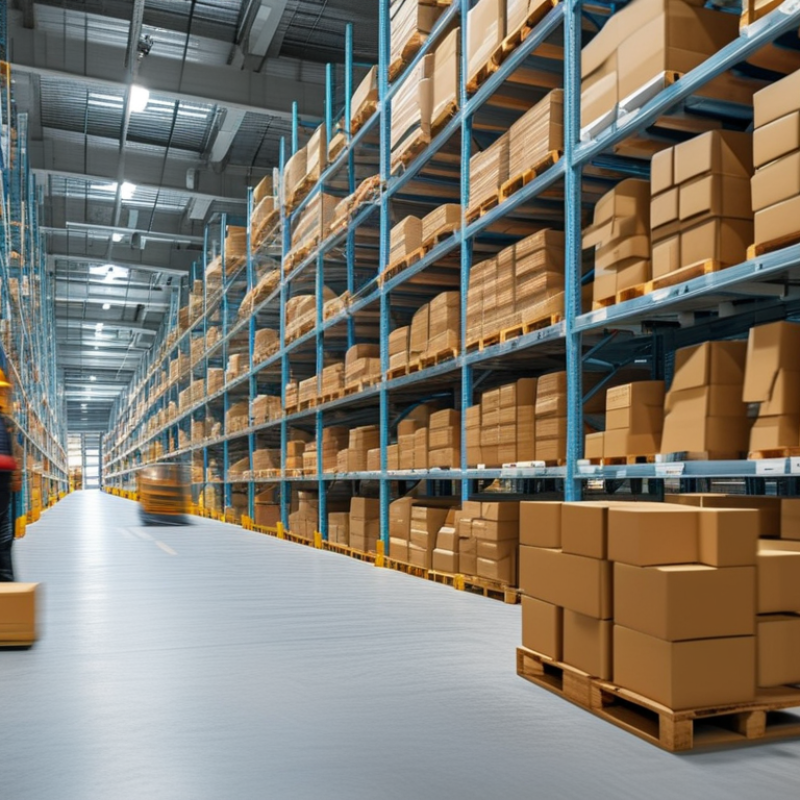
China Top Wave Picking vs Batch Picking Which Is Better?
Wave picking and batch picking solve different warehouse problems. Batch picking groups several orders that share the same stock-keeping units. A picker may collect 40 units of one item, then send them to separate packing stations. This reduces repeated travel, especially when fast-moving products sit near the front of a 12-aisle warehouse. Wave picking releases orders during planned time windows. The schedule may follow carrier collection, labor availability, or promised delivery time. A morning wave might serve local shipments, while an afternoon wave handles longer-distance orders.
The choice depends on order profiles, not fashion. Batch picking suits many small orders with repeated items. Wave picking works better when dispatch deadlines, zones, or labor shifts control the operation. They can also work together. A warehouse may release a wave at 10:00, then batch similar orders inside that wave. MHI’s 2024 Annual Industry Report states that 55% of surveyed supply-chain professionals expected to adopt inventory and network optimization technologies within five years. Better release planning is part of that effort.
The numbers need testing. A 2024 WERC benchmarking report emphasizes measuring productivity, accuracy, and cycle time together. Faster picking means little if sorting errors increase. In practice, a poorly timed wave can create crowded aisles and idle packers. Batch picking can create the same problem at sorting. Small pilot tests, clear scan records, and weekly review usually reveal the honest answer. Warehouses often assume one method wins. That assumption deserves challenge.
| Operational Dimension | Wave Picking | Batch Picking |
|---|---|---|
| Basic Definition |
Planned release method Orders are released for picking in scheduled groups, or “waves,” according to time, carrier, zone, priority, or workflow requirements. |
Order-grouping method Multiple orders with common stock-keeping units are picked together during one warehouse trip, then separated during sorting or order consolidation. |
| Primary Objective | Synchronize picking with packing, shipping cut-off times, labor availability, replenishment, and downstream warehouse activities. | Reduce repeated travel by allowing one picker to collect quantities for several customer orders in a single route. |
| How Orders Are Grouped | Orders may be grouped by dispatch time, carrier, service level, warehouse zone, product temperature, customer priority, or processing stage. | Orders are grouped mainly by shared items or shared picking locations. The group is commonly limited by cart capacity, tote capacity, or order similarity. |
| Typical Order Profile | Suitable for mixed order profiles where different service promises and shipping deadlines must be coordinated. | Most effective for many small orders with overlapping SKU demand and relatively simple item quantities. |
| Travel Reduction | Can reduce unnecessary movement when wave rules align orders with warehouse zones and work schedules; the result depends on wave design and layout. | Often provides strong travel savings because the picker visits a shared location once for several orders instead of once per order. |
| Sorting Requirement | Sorting may be limited when each wave is already assigned to a destination, route, zone, or shipping group. | Usually requires a sortation step, such as put-to-light, put-to-wall, barcode scanning, or manual order separation after picking. |
| Labor Profile | Supports planned labor allocation by assigning work according to time windows, zones, skills, or workload levels. | Can improve picker productivity, but additional labor may be needed for sorting, verification, and order consolidation. |
| Order Accuracy Risk | Accuracy depends on release rules, scanning controls, location discipline, and whether orders are mixed within the wave. | There is an added risk of assigning picked units to the wrong order during sorting; barcode verification and dedicated containers help control this risk. |
| Throughput Control | Provides strong control over when work enters the picking process and helps balance picking with packing and loading capacity. | Improves picking efficiency, but a large batch can create a bottleneck at sorting, packing, or order consolidation. |
| Response to Urgent Orders | Can prioritize urgent orders by releasing a special wave or inserting them into an expedited workflow. | Urgent orders may be difficult to insert into an existing batch without interrupting the route or creating a separate batch. |
| Inventory and Replenishment Coordination | Wave schedules can be timed after replenishment and inventory checks, reducing interruptions during a planned release window. | High-demand items may be depleted quickly because several orders are picked together; replenishment must be monitored closely. |
| Warehouse Management System Needs | Requires rules for wave creation, order prioritization, release timing, zone assignment, and workload balancing. | Requires batch-building logic, shared-SKU analysis, quantity allocation, container identification, and post-pick sorting controls. |
| Physical Equipment | May use carts, pallet trucks, conveyors, zone-picking stations, sortation equipment, or automated storage interfaces. | Commonly uses multi-compartment carts, totes, shelves, barcode scanners, put walls, or automated sortation systems. |
| Best-Fit Environment | Large or complex operations with multiple shipping deadlines, diverse order types, several warehouse zones, or coordinated picking and packing processes. | High-volume e-commerce, retail replenishment, or small-order operations where many orders share the same fast-moving products. |
| Main Advantages | Better schedule control, easier coordination with shipping, improved workload planning, and flexible handling of different order priorities. | Fewer repeated trips, better picker utilization for overlapping orders, and potentially higher lines picked per travel cycle. |
| Main Limitations | Poorly sized or poorly timed waves can create idle time, congestion, uneven workloads, or a surge of orders at packing stations. | Requires accurate sorting and order tracking; large or poorly formed batches can increase handling, errors, and downstream congestion. |
| Key Performance Indicators | Wave completion time, orders released on time, picker utilization, lines per labor hour, dock cut-off compliance, and packing-station utilization. | Lines per travel hour, picks per labor hour, average batch size, travel distance per order, sorting accuracy, and batch completion time. |
| Illustrative Planning Example | If 240 orders must be shipped by a fixed cut-off, the operation may release four waves of 60 orders to align picking and packing capacity. The exact wave size should be based on actual labor, equipment, and station capacity. | If 20 orders require the same fast-moving item, one trip can collect the combined quantity and then allocate units to the 20 orders. The benefit depends on SKU overlap and the time required for sorting. |
| Better Choice When | Shipping deadlines, workflow synchronization, service-level priorities, and workload balancing are more important than maximizing route consolidation alone. | Orders are small, SKU overlap is high, travel is a major cost, and the warehouse has reliable sorting and order-identification controls. |
| Can They Be Combined? | Yes. A warehouse can release orders in waves and then create batches inside each wave. For example, orders for the same dispatch window can be released as one wave, while overlapping SKUs within that wave are picked in batches. | |
| Decision Note | Neither method is universally better. The appropriate choice depends on order-line density, SKU overlap, travel distance, shipping deadlines, labor availability, sorting capability, warehouse layout, and the control functions available in the warehouse management system. | |
: Batch picking groups orders with shared items. A picker may collect 40 units, then sort them into separate totes.
Wave picking releases orders during planned time windows. Timing may follow carrier cutoffs, labor shifts, or delivery promises.
Batch picking often suits small orders with repeated fast-moving items. It can reduce walking through a 12-aisle warehouse.
Wave picking fits scheduled dispatches, delivery zones, or controlled labor shifts. It creates a steadier flow toward packing.
Yes. A warehouse might release orders at 10:00, then batch similar items inside that wave.
A badly timed wave may crowd aisles, overload packing benches, or leave workers waiting between releases.
Sorting becomes more demanding. One misplaced unit can affect several customer orders.
Measure order lines, walking distance, picking time, accuracy, and dispatch performance for several weeks.
Very much. An empty shelf can stop a fast picker. Poor slotting may weaken an otherwise good method.
No. Order patterns decide the answer. A small pilot may expose an inconvenient truth.
Understanding what is wave picking vs batch picking is essential for choosing an efficient warehouse order fulfillment strategy. Wave picking organizes orders into scheduled groups, often based on shipping deadlines, warehouse zones, product categories, or carrier collection times. In Chinese warehouses, teams typically release one wave at a time, allowing labor, equipment, and replenishment activities to be coordinated more effectively. This method provides strong control over workflow and is especially useful when orders must be completed within specific time windows.
Batch picking groups orders that share similar products or storage locations, enabling workers to collect multiple orders during a single route. After picking, the items are sorted and consolidated according to each individual order. Compared with wave picking, batch picking can reduce travel time and improve productivity for repetitive, high-volume orders, while wave picking offers better scheduling and process control. The best choice depends on order volume, product variety, delivery deadlines, warehouse layout, and available technology. Some operations may also combine both methods to balance speed, accuracy, and operating cost.

 RAB Logistics