China Top 10 Conveyors How to Choose Gravity vs Motorized?

Time:2026-09-23 Author:Madeline
0%

China’s conveyor industry is expanding with warehouse automation, e-commerce fulfillment, and manufacturing upgrades. MHI’s 2024 Annual Industry Report, based on more than 2,000 supply chain professionals, highlights continuing investment in automation and persistent labor challenges. These pressures make conveyor selection a practical decision, not merely a purchasing exercise.

This guide examines China’s top 10 conveyor manufacturers and asks how to choose between gravity and motorized conveyors. Gravity rollers can move cartons economically across short, level transfer points. They suit stable loads, manual picking, and low-to-medium throughput. Motorized conveyors provide controlled movement, accumulation, and better synchronization with scanners, sorters, and packaging equipment. They also require power, controls, maintenance access, and a clearer return-on-investment calculation.

Small details matter. A heavy carton may stop on undersized rollers. A flexible package may sag between wide roller gaps. A motorized zone can reduce manual pushing, but its sensors and drives need regular inspection. Interact Analysis reports that warehouse automation demand remains closely linked to throughput, labor availability, and operational flexibility. Still, market reports cannot understand every factory floor. That is the uncomfortable part.

A conveyor that performs well in a high-volume distribution center may be excessive for a small workshop. This comparison will consider load weight, speed, incline, noise, layout, energy use, safety, maintenance, and total cost. It will also identify where supplier claims need verification. The best answer is rarely the most powerful machine. It is the system that fits the product, process, and people.
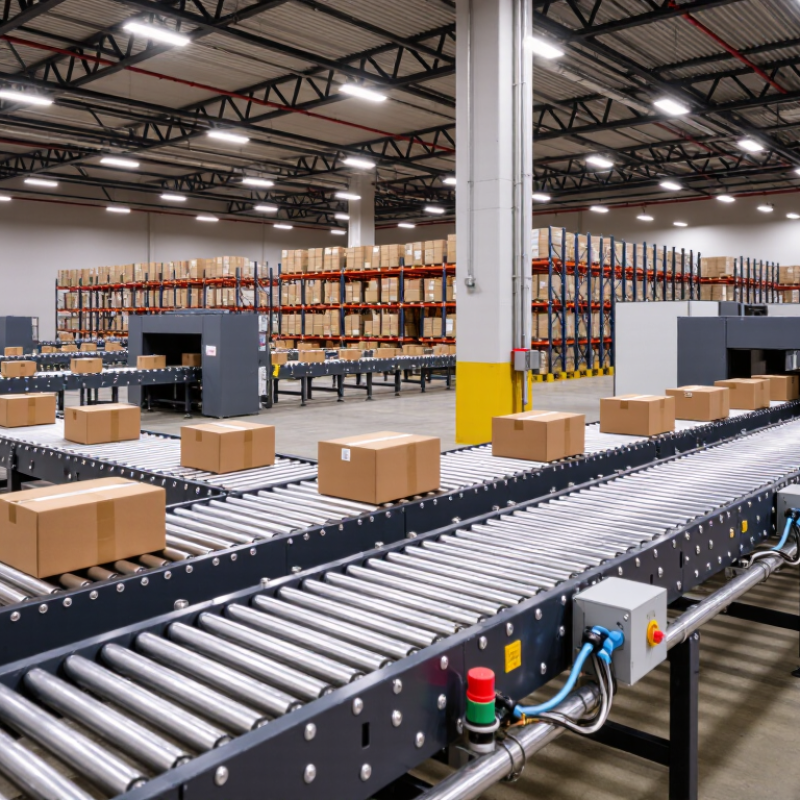
China Top 10 Conveyors How to Choose Gravity vs Motorized?

What Defines China’s Top 10 Conveyor Systems?

China’s top 10 conveyor systems are not defined by appearance or sales claims. “Top 10” is a practical benchmark, not an official national ranking. The strongest systems combine stable throughput, accurate sorting, safe operation, and adaptable layouts. According to MarketsandMarkets, the global conveyor system market was projected to grow from about USD 10.6 billion in 2023 to USD 14.5 billion by 2028. This growth reflects demand for efficient material handling, especially in warehouses and manufacturing plants.

Performance must be measurable. A serious evaluation checks hourly capacity, belt speed, noise, downtime, energy use, and maintenance access. Motorized conveyors suit frequent movement, accumulation, and controlled routing. Gravity conveyors can reduce energy consumption for short, downhill transfers, but they depend heavily on load weight and floor alignment. Small rollers may stop a carton. That detail matters.

Safety and reliability define the leaders. Systems should support guarding, emergency stops, clear manuals, and risk assessment under recognized industrial practices. The 2024 MHI Annual Industry Report found that 89% of supply-chain professionals expected to increase technology investment. That figure supports automation, but it does not prove every automated conveyor is suitable. In real projects, poor sensor placement and weak after-sales support still cause delays. A top system is therefore one that performs consistently, fits local operating conditions, and remains serviceable after installation.

How Gravity Conveyors Work and When to Use Them

Gravity conveyors move loads through a slight incline, not a powered drive. Rollers turn when cartons receive a push from gravity or an operator. This simple design suits cartons, totes, and plastic bins with firm, flat bases. It needs little energy and usually creates fewer maintenance points. The CEMA Application Guide for Unit Handling Conveyors stresses load shape, weight, roller spacing, and slope when selecting equipment. A small carton can stall when its base bridges two rollers. That detail is often missed.

Gravity systems work well for short transport, packing stations, shipping lanes, and controlled accumulation. They are less suitable for fragile products, steep elevation changes, or uneven loads. A motorized conveyor offers steadier speed and better control. Still, adding a motor may solve a problem that careful layout could prevent. MHI’s 2024 Annual Industry Report found that 55% of supply-chain leaders planned to increase technology investment in 2024. Investment does not always mean full automation. It can mean improving flow with a practical gravity section first.

Tips: Measure the heaviest carton. Test the lightest carton. Keep the slope modest, then adjust after observing real movement. CEMA guidance commonly uses load dimensions and roller pitch to prevent bridging. Leave safe hand clearance near transfer points. Record jams during a normal shift, not only during a clean demonstration. Gravity conveyors look simple, but poor spacing can create repeated stoppages.

How Motorized Conveyors Work and Where They Perform Best

Motorized conveyors use powered rollers, belts, or chains to move loads at a controlled speed. A motor drives the system through a gearbox, while sensors and controls regulate movement. In a warehouse, a carton can travel from receiving to packing without repeated lifting. That reduces handling strain. It also improves flow when volume changes quickly.

The practical detail matters. Belt tension, load weight, incline, and speed must match the application. A poorly selected motor may overheat or stall. I have seen teams focus on maximum capacity, then overlook starting torque. That mistake can create delays during busy shifts. Motorized conveyors perform best where products need consistent movement, spacing, or elevation. They suit distribution centers, production lines, parcel areas, and temperature-controlled rooms. Powered rollers handle rigid cartons well. Belts are more forgiving with soft packages or uneven bases.

Maintenance is not optional. Operators should inspect belts, bearings, guards, emergency stops, and cable connections regularly. Dust and loose packaging can affect sensors. Noise, vibration, or uneven tracking often signals a developing fault. Small warning signs deserve attention. Gravity conveyors remain useful for light, predictable loads and short manual runs. They need less equipment, but workers must provide the pushing force. Motorized systems cost more and require electrical planning, yet they offer better control and repeatability. The right choice depends on throughput, product shape, layout, labor, and safety requirements. A site test with real cartons is wiser than relying only on a specification sheet. Even then, assumptions should be recorded and challenged.

China Top 10 Conveyors: How to Choose Gravity vs Motorized? – How Motorized Conveyors Work and Where They Perform Best

No. Conveyor Type Typical Application How It Works Typical Load Typical Speed Gravity or Motorized? Best Selection Conditions
1 Gravity Roller Conveyor Cartons, totes, and pallet transfer between workstations Products move by manual pushing or by a slight conveyor incline using gravity. Usually 5–500 kg per unit, depending on roller diameter and frame design Manual or approximately 0.1–0.3 m/s on an incline Gravity Choose it for low-cost, low-maintenance movement when controlled speed and accumulation are not critical.
2 Motorized Roller Conveyor Parcel handling, order fulfillment, assembly, and pallet movement A geared motor drives rollers directly or through chains, belts, or O-rings. Approximately 5–2,000 kg per unit, subject to roller spacing and drive capacity About 0.1–1.0 m/s for standard material handling Motorized Use it when consistent speed, powered accumulation, controlled stopping, or bidirectional conveying is required.
3 Belt Conveyor Packages, bags, small parts, food products, and inclined conveying An electric drive pulley rotates a continuous belt supported by rollers or a slider bed. Approximately 1–100 kg per meter of belt; higher capacities require reinforced designs Commonly 0.2–2.0 m/s Motorized Select it for small, irregular, soft-bottom, or inclined products that may not move reliably on rollers.
4 Chain Conveyor Pallets, metal containers, automotive components, and heavy loads One or more powered chains support and push loads along a fixed path. Typically 100–3,000 kg per load, depending on chain configuration Approximately 0.05–0.5 m/s Motorized Best for heavy, rigid-bottom loads and harsh environments where high traction is important.
5 Slat Conveyor Bottles, cans, containers, and products requiring stable positioning A motor-driven chain carries connected metal, plastic, or composite slats. Usually 5–100 kg per meter, depending on slat width and support Commonly 0.05–0.6 m/s Motorized Choose it when products need a flat, stable surface, controlled spacing, or frequent washing and cleaning.
6 Cleated Incline Conveyor Moving cartons, bags, loose parts, and packaged goods between elevations A belt with raised cleats prevents products from sliding backward on an incline. Approximately 5–50 kg per meter of belt About 0.2–1.0 m/s Motorized Use it for elevation changes, especially when the product surface is unstable or the incline exceeds normal gravity-flow limits.
7 Flexible Roller Conveyor Temporary loading, unloading, truck bays, and warehouse staging Expandable roller sections are moved into position; products are pushed or travel by gravity. Generally 5–80 kg per unit Manual or approximately 0.1–0.25 m/s on a suitable incline Gravity Select it when layout flexibility and rapid deployment are more important than high throughput or precise control.
8 Overhead Conveyor Hanging garments, painted parts, components, and products requiring floor clearance A powered chain or cable transports carriers along an overhead track. Typically 5–300 kg per carrier Approximately 0.05–0.5 m/s Motorized Use it where floor space is limited, products must hang freely, or processes such as painting and drying are integrated.
9 Screw Conveyor Powders, granules, grains, chemicals, and other bulk materials A rotating helical screw moves bulk material through a trough or enclosed tube. Commonly 1–100 t/h, depending on material, screw diameter, and speed Typically 20–200 rpm Motorized Choose it for enclosed bulk conveying, metering, mixing, or short-distance horizontal and inclined transport.
10 Pallet Accumulation Conveyor Manufacturing lines, storage buffers, assembly cells, and dispatch areas Motor-driven zones start and stop independently to create controlled product accumulation. Usually 200–2,000 kg per pallet Approximately 0.05–0.4 m/s Motorized Select it when buffering, zero-pressure accumulation, sensor control, and synchronized production flow are required.
Selection Note: Gravity conveyors generally have lower purchase and operating costs but require suitable product weight, surface condition, slope, and manual handling. Motorized conveyors use an electric motor and transmission system to provide controlled speed, positive movement, accumulation, elevation changes, and better integration with sensors or automation. Actual capacity and speed must be confirmed through product dimensions, load distribution, conveyor length, incline angle, duty cycle, and safety requirements.

Gravity vs Motorized Conveyors: Key Selection Criteria

Gravity and motorized conveyors solve different problems. Gravity rollers suit cartons that roll freely, short travel, and stable floor slopes. They use no drive motor. That matters when electricity is limited. Motorized conveyors fit uneven loads, long routes, controlled speeds, and frequent starts. They also support accumulation and sensor-based routing. The choice should begin with load behavior, not purchase price. A 20-kilogram carton with a flat base behaves differently from a soft parcel. Test both.

MHI’s 2024 Annual Industry Report says 55% of surveyed supply-chain leaders planned to increase investment in innovation. That pressure can favor motorized systems, but automation is not automatically efficient. The U.S. Department of Energy reports that motor-driven systems consume more than half of industrial electricity in the United States. Select efficient motors, right-sized drives, and automatic shutdown for idle zones. Gravity may win where flow is predictable. Motorization becomes stronger when labor, speed, or traceability limits output.

Check maintenance access, noise, emergency stops, guarding, and cleaning space before layout approval. CEMA guidance and local machinery-safety rules should inform the design. A useful trial measures throughput, jams, energy, and operator walking distance. One imperfect assumption can change the result. Seasonal volume is easy to underestimate. Recheck the choice with real cartons, peak demand, and damaged-package scenarios.

How to Compare China’s Top 10 Conveyors for Your Operation

When comparing China’s top ten conveyor options, start with your operation, not a catalog ranking. Record package weight, carton dimensions, hourly volume, line length, and available floor space. A gravity conveyor suits steady manual handling, short transfers, and low installation cost. It needs little maintenance. However, operators must push cartons, and flow can become uneven near packing stations. A motorized conveyor provides controlled movement across longer routes. It supports timed feeding, accumulation, and higher throughput. Power demand and controls add cost. Measure twice.

Ask each supplier for load ratings, roller spacing, belt material, speed range, noise data, and emergency-stop design. Request drawings showing guards, transfer points, working height, and cleaning access. These details reveal whether the equipment fits your actual process. A top-ten list is only a starting filter. Compare delivered cost, spare-part availability, installation support, warranty terms, and response times. Check whether technicians can troubleshoot sensors and drive units locally. Good documentation matters when production stops at 10 p.m.

Run cartons through a test section using your heaviest and smallest packages. Watch for slipping, skewing, gaps, and operator stretching. For dusty or humid areas, inspect seals and frame finishes before choosing. Gravity may look simple, yet poor slope calculations can create jams. Motorized systems may improve flow, but excessive speed can damage fragile goods. I would also question advertised capacity; it often assumes ideal cartons and perfect loading. Compare measured results, not impressive brochures. Record energy use and stoppage causes during a pilot week.

FAQS

What defines a top conveyor system?

It combines stable throughput, accurate sorting, safe operation, and flexible layouts. “Top 10” is not an official ranking. Performance must be measured, not assumed.

Which measurements should buyers compare?

Check hourly capacity, belt speed, noise, downtime, energy use, and maintenance access. Record results during normal shifts. Clean demonstrations can mislead.

How does a gravity conveyor work?

A slight incline lets cartons move without a powered drive. Rollers turn after a push from gravity or an operator. Simple and low-energy.

What products suit gravity conveyors?

They suit cartons, totes, and bins with firm, flat bases. Short shipping lanes and packing stations are common uses. Uneven loads may stall.

Why can a small carton stop moving?

Its base may bridge two rollers instead of touching enough rollers. Roller spacing must match the smallest load. Small details matter.

When are motorized conveyors more suitable?

They work well when products need steady speed, spacing, routing, or elevation. They suit busy warehouses and production lines. Control improves flow.

What maintenance problems should operators watch for?

Inspect belts, bearings, guards, emergency stops, and cable connections regularly. Dust can affect sensors. Noise, vibration, and uneven tracking are warning signs.

Is full automation always the best investment?

No. A practical gravity section may improve flow before expensive automation. More technology does not guarantee better results. I might underestimate layout problems.

How should a conveyor system be tested before purchase?

Test real cartons, including the heaviest and lightest loads. Observe jams during a normal shift. Record assumptions, then challenge them.

What safety features should a conveyor include?

It should support guarding, emergency stops, clear manuals, and documented risk assessment. Leave safe hand clearance near transfer points. Safety shortcuts age badly.

Conclusion

China’s top 10 conveyor systems can be evaluated by their structure, load capacity, operating environment, flexibility, safety features, maintenance needs, and total cost of ownership. Gravity conveyors move products through natural slope or manual pushing, making them suitable for lightweight goods, short-distance transfers, packing areas, and operations where simple, low-cost handling is preferred. They require limited power and maintenance but may offer less control over speed and product flow.

Motorized conveyors use powered rollers, belts, or chains to provide consistent movement and better control over distance, speed, product weight, and automation requirements. They are often better for continuous production, high-volume distribution, and layouts involving elevation changes or complex routing. To understand how to choose between gravity and motorized conveyors, businesses should compare throughput, product characteristics, available space, energy use, installation requirements, safety, and future expansion plans. Selecting from China’s top 10 conveyor options should ultimately depend on operational goals, reliability expectations, and long-term value rather than initial price alone.

Madeline

Madeline

Madeline is a dedicated marketing professional with a wealth of expertise in our company's core offerings. With a keen understanding of the industry, she brings a unique perspective to her role, consistently delivering high-quality content that highlights the superior aspects of our products. As......